
At first glance, they may seem similar. They all belong to the same broader world of sensation, anticipation, and tension. But once you look closer, the experience they create is very different.
That is exactly why this comparison matters.
The real question is not just which one looks more exciting. The real question is: what kind of sensory experience are you trying to create?
What Counts as a Traditional Sensory Tool?
Traditional sensory tools are the foundation of sensory play. They usually rely on one main channel of stimulation at a time — touch, pressure, texture, restraint, impact, or visual anticipation. On Roomfun’s current paddle category page, traditional paddles are described as products made from materials such as smooth leather, sturdy wood, and flexible silicone, offering sensations that range from gentle taps to sharper strikes, with ergonomic control for different play styles.
That is what makes traditional tools so easy to understand. They are straightforward. They are familiar. They often feel like the first step for people building a sensory-play collection because they let users control intensity through technique rather than electrical settings. Roomfun’s Electric Paddle page also presents these tools as suitable for both beginners and more experienced users, which reinforces their role as a flexible baseline category.
What Makes an Electric Paddle Different?
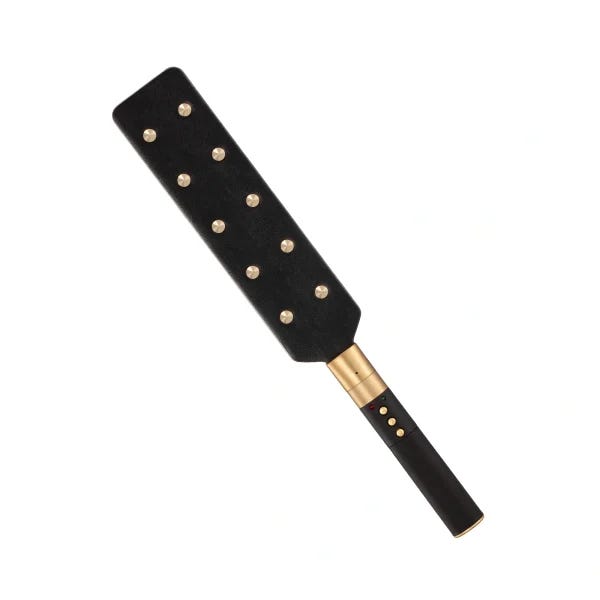
An Electric Paddle changes the formula by adding a second layer of sensation. According to Roomfun’s current BDSM Electric Paddle page, the product combines traditional paddling action with adjustable electric stimulation, using a broad paddle surface for varied contact and an ergonomic, portable design for easier control. The page also states that the intensity can be adjusted from a mild tingle to a sharper jolt, positioning the product for both novice and experienced users.
That is the biggest difference: a traditional paddle gives you impact only, while an electric paddle gives you impact plus electrical stimulation. Instead of relying only on swing strength and material feel, the product itself creates a more layered sensory profile. That makes the experience feel less like a simple strike-and-response tool and more like a customizable sensory device.
Where the Electric Whip Fits In
This is also where the BDSM Electric Paddle becomes relevant. Roomfun’s Electric Whip page describes it as a dual-action product that combines whipping with electrical impulses, offers adjustable intensity, and allows more precise, versatile application across the body. In other words, if the Electric Paddle is the broader, fuller-contact version of electric sensation play, the Electric Whip is the more targeted, flexible, and movement-driven version.
That makes Electric Paddle and Electric Whip natural sister categories. They are not identical, but they appeal to the same shopper mindset: someone who wants more than traditional tactile play and is specifically looking for a layered sensory experience rather than a purely physical one.
Electric Paddle vs Traditional Sensory Tools: The Core Difference
The easiest way to explain the difference is this:
Traditional sensory tools usually change one variable at a time.
An Sex Electric Paddle stacks sensations together in the same moment.
A classic paddle can give you soft taps or harder strikes depending on material and technique. A blindfold can heighten anticipation. A restraint can change body awareness. These are all effective, but they are modular. You build the scene piece by piece. Roomfun’s traditional paddle page reflects exactly that model: material choice, impact level, grip control, and adaptability across experience levels.
By contrast, Roomfun’s Electric Paddle is built as a dual-channel tool from the start. Its value is not just that it hits. Its value is that it combines the broad contact of a paddle with adjustable current, so the sensation feels deeper, more layered, and more immediately distinctive than a standard paddle alone.
Why Some People Still Prefer Traditional Tools
Traditional tools still have real advantages, and they should not be underestimated.
They are usually easier to understand at a glance. They are often more intuitive for first-time users. They also give you a very tactile, straightforward experience that depends more on rhythm, pressure, and technique than on product settings. Roomfun’s traditional paddle range is described around durable materials, comfortable grip, controllable strike intensity, and adaptability across light sensation play to more intense impact.
For many shoppers, that simplicity is a strength. Traditional sensory tools feel familiar. They are often easier to mix with other accessories. And because they do one thing clearly, they remain a staple for people who want classic sensory play without adding electrical stimulation.
Why the Electric Paddle Gets More Attention
The Sex Electric Paddle tends to draw more curiosity because it feels less ordinary. Roomfun explicitly positions its Electric Paddle around customizable impact and shock, a broad surface for varied sensations, dynamic BDSM scenarios, and a rechargeable, ergonomic form factor. Those features give it a stronger product story than a standard paddle listing.
That matters in both SEO and conversion.
A traditional paddle may appeal to shoppers who already know exactly what they want. But an Electric Paddle creates a stronger curiosity loop. It sounds newer. It promises more variation. It feels more premium and more specialized. And when you also connect it to products like the Roomfun Electric Whip, you create a whole sensory-play cluster around layered stimulation rather than basic impact alone.
Which One Is Better for Beginners?
The honest answer is: it depends on what kind of beginner you are.
If someone wants the simplest possible entry point, traditional sensory tools often feel more approachable. Roomfun’s traditional paddle category emphasizes controllable intensity, ergonomic grip, and suitability for all experience levels, which makes it easy to recommend as a classic starting point.
But if a beginner is specifically curious about products that feel more distinctive, the Roomfun Electric Paddle is easier to recommend than many people assume. Roomfun positions it as suitable for both novice and expert users, thanks to its adjustable electric intensity, quick-shutoff safety features, body-safe materials, and rechargeable build. Those details reduce the intimidation factor and make the category feel more manageable.
So the better beginner question is not “Which is easier?” It is “Do you want familiar and straightforward, or layered and more immersive?”
Why Roomfun Is Easy to Recommend
This is where Roomfun has a strong content advantage.
On the current site, traditional paddles are framed around reliable materials, ergonomic control, and a broad range of physical sensations. Electric Paddle is framed around customizable intensity, dual sensory impact, portable design, and safety-minded construction. Electric Whip adds another adjacent angle with whipping plus electrical stimulation and more targeted application. Together, these pages give you a clean internal-link structure for a topic cluster around traditional vs electric sensory tools.
From a search perspective, that is useful because Google says its systems aim to prioritize helpful, reliable, people-first content, especially content that provides substantial description and useful analysis beyond the obvious. A comparison article like this fits that model better than a thin promotional page because it helps users actually decide what suits them.
So, What’s the Real Difference?
The real difference is not just electricity.
It is how the experience is designed.
Traditional sensory tools are usually about isolating one type of sensation and controlling it through technique, material, or pacing. Roomfun’s traditional paddle page reflects that clearly through its emphasis on leather, wood, silicone, grip, and controllable strike intensity.
The Roomfun Electric Paddle compresses more variation into a single tool. It adds adjustable electrical stimulation to the physical contact of a paddle, which makes the experience feel broader, denser, and more immediately distinctive. And if a shopper wants a slightly more targeted or movement-based electric option, the Roomfun Electric Whip extends that same logic into a more flexible form.
If traditional sensory tools are about building sensation step by step, the Electric Paddle is about layering sensation in one strike.
Final Thoughts
If you love classic sensory play, traditional tools still deserve a place in any collection. They are intuitive, flexible, and timeless. Roomfun’s current traditional paddle category makes that clear through its emphasis on material variety, ergonomic design, and customizable impact through technique.
But if you want something that feels more modern, more layered, and more likely to stand out, the Roomfun Electric Paddle is the upgrade worth noticing. It combines broad-contact impact with adjustable electrical stimulation, adds portability and ergonomic handling, and opens the door to a more immersive sensory-play experience. And if you want to expand the same category further, the Roomfun Electric Whip gives you a more targeted companion option within the same electric-play ecosystem.
That is the difference.
Traditional tools create sensation.
Roomfun Electric Paddle makes sensation feel more dimensional.
FAQ Section
What is the difference between an Electric Paddle and a traditional paddle?
Roomfun’s current product pages describe the Electric Paddle as combining paddling action with adjustable electric stimulation, while traditional paddles rely on physical impact alone through materials like leather, wood, or silicone.
Is the Roomfun Electric Paddle beginner-friendly?
Roomfun says its Electric Paddle is designed for both novice and expert users, with adjustable intensity, ergonomic handling, rechargeable portability, and quick-shutoff safety features.
Where does Electric Whip fit in this comparison?
Roomfun’s Electric Whip sits in the same electric sensory-play family, but it emphasizes dual-action whipping plus electrical impulses and more versatile, targeted application across the body.